Strengthening international collaboration through the MosquitoTrack project
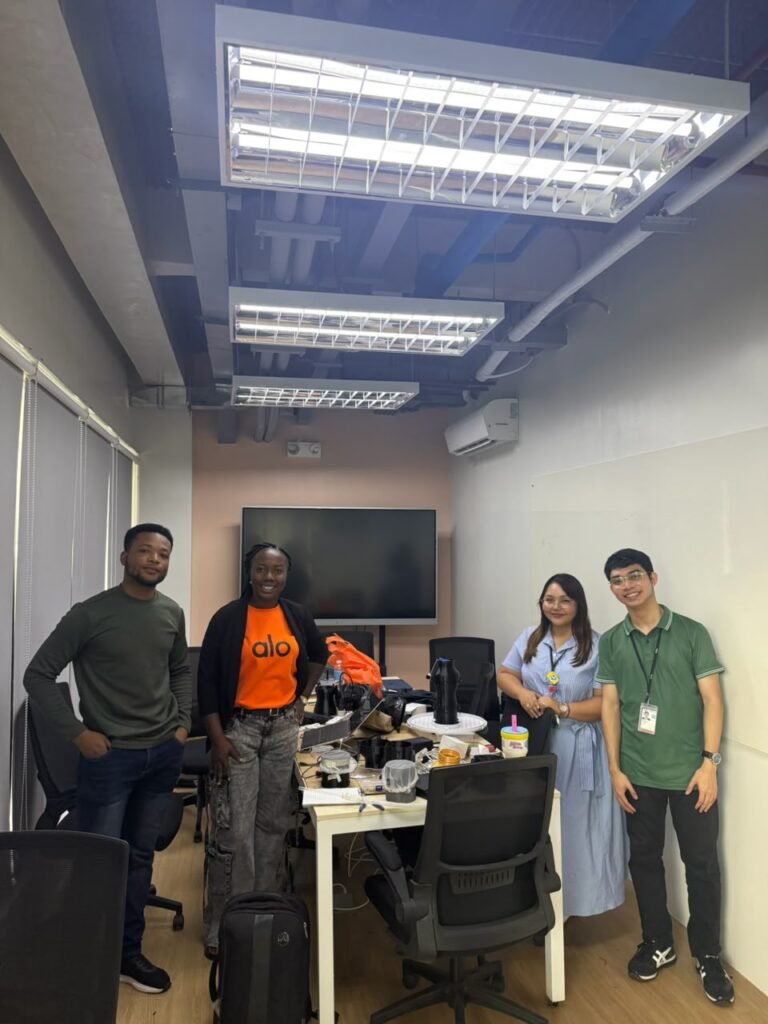
In July and August 2026, the AI4PEP Ghana team from Kwame Nkrumah University of Science and Technology (KNUST) travelled to the Philippines for a collaborative research visit with researchers at De La Salle University, Laguna Campus.
The visit brought together researchers working across different disciplines and geographical contexts to advance the development of MosquitoTrack, an AI-driven and climate-informed mosquito surveillance system. The collaboration formed part of the broader AI4PEP-MSD2 project, which is exploring innovative approaches to understanding mosquito populations and strengthening disease surveillance.
Over two weeks, the Ghana and Philippines teams worked closely together, combining expertise in mosquito research, artificial intelligence, acoustic sensing, hardware development and data analysis.
Taking MosquitoTrack from the laboratory to the field
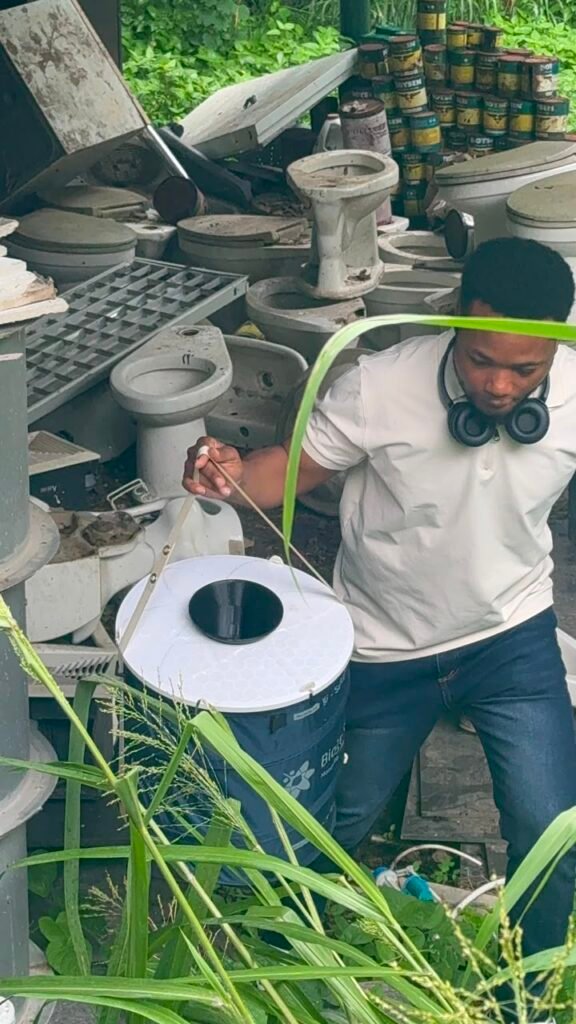
A major focus of the visit was the deployment and testing of custom mosquito trap devices at the De La Salle University, Laguna Campus.
The devices were designed to support the collection of different forms of surveillance data. Each system incorporated environmental and sensing components, including temperature and humidity sensors, GPS location tracking and a microphone.
These features are important to the broader goal of MosquitoTrack: developing a surveillance approach that does not look at mosquito activity in isolation but considers the environmental conditions and location in which that activity occurs.
During the field activities, the teams worked together to set up the devices and test how effectively they could operate under real-world conditions. The process involved hands-on assembly, deployment, testing and evaluation of the trap hardware.
Field testing is an essential stage in the development of research technologies. While a system may perform well in controlled conditions, real environments introduce additional challenges. Testing the MosquitoTrack devices in the field provided an opportunity to understand how the technology performs outside the laboratory and identify areas for continued improvement.
Listening to mosquitoes through acoustic data
Another important component of the collaboration focused on mosquito wingbeat sounds.
Mosquitoes produce characteristic sounds through the movement of their wings, and these acoustic signals can potentially provide useful information for mosquito identification and surveillance. Within the MosquitoTrack project, sound data is being explored as one of the information sources that can support machine learning approaches to mosquito monitoring.
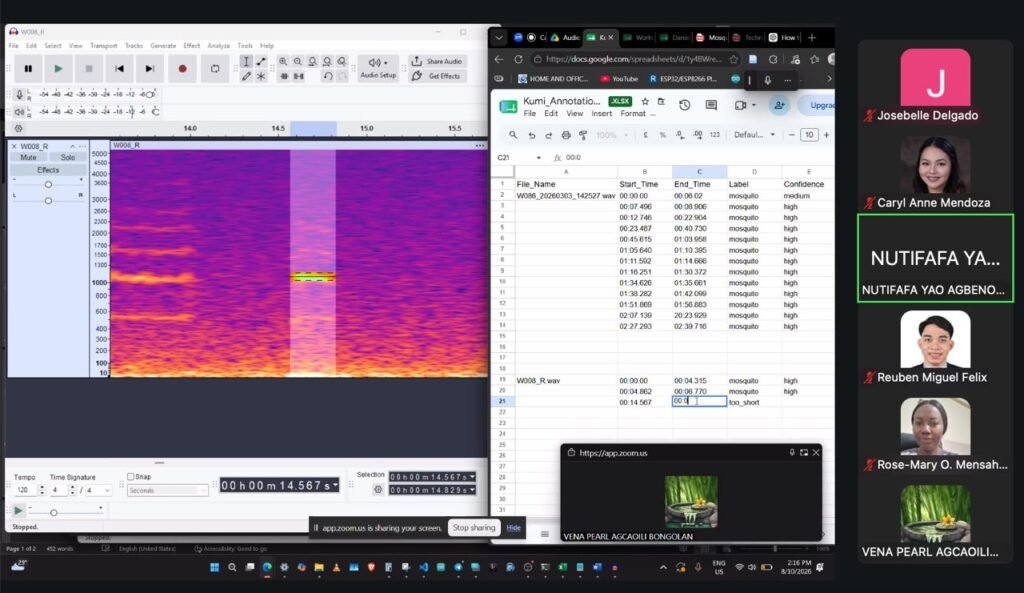
During the visit, the AI4PEP Ghana team worked with researchers in the Philippines through a practical workshop on recording mosquito wingbeat sounds and annotating the collected data.
Data annotation is a critical part of developing machine learning systems. For AI models to learn meaningful patterns, the data used for training must be carefully organised and labelled. The workshop therefore supported the Philippines team in understanding the processes involved in recording acoustic data and preparing it for use in machine learning research.
By building local capacity in data collection and annotation, the collaboration also supports continued research beyond the period of the visit.
Reviewing data through the online surveillance dashboard
The collaboration extended beyond the physical mosquito trap devices.
The teams also reviewed the online dashboard used to monitor deployed devices and visualise surveillance data. The dashboard provides an important link between field-based sensing and data-driven analysis.
As mosquito surveillance technologies generate increasing amounts of information, researchers need effective ways to monitor and interpret the data being collected. Digital platforms can help bring together information from multiple devices and locations, providing researchers with a clearer view of system activity and the data generated in the field.
The dashboard review created an opportunity for both teams to discuss how the platform supports the wider research process and how information collected through the MosquitoTrack devices can be monitored and analysed.
This connection between field devices, environmental sensing, acoustic data and digital monitoring platforms represents an important part of the MosquitoTrack approach.
Knowledge exchange across teams and disciplines
The visit was also an opportunity for meaningful knowledge exchange.
Researchers from KNUST and De La Salle University participated in joint presentations and discussions, sharing their experiences, research approaches and perspectives on mosquito surveillance and AI-driven health technologies.
Collaboration of this nature is particularly valuable because mosquito-borne diseases and the environmental conditions that influence mosquito populations vary across countries and regions. Working across different locations creates opportunities to learn from diverse research environments and to consider how technologies can be adapted to local needs.
The hands-on nature of the visit also allowed researchers to work together directly on the technology. From assembling and testing hardware to discussing data collection and machine learning workflows, the collaboration created a practical space for shared learning.
Supporting continued research in the Philippines
Before the AI4PEP Ghana team departed, equipment was handed over to the Philippines team to support the continuation of field testing and data collection.
This was an important part of ensuring that the work initiated during the visit could continue after the Ghana team returned home.
Continued field deployment will allow researchers to gather additional data, test the system over time and further explore how the technology performs under local environmental conditions.
Long-term data collection is particularly important for mosquito surveillance research. Mosquito activity can be influenced by a range of environmental and seasonal factors, and continued monitoring can help researchers better understand these changing patterns.
Building smarter, climate-informed surveillance tools
The MosquitoTrack collaboration reflects a growing interest in using emerging technologies to strengthen approaches to vector surveillance.
Traditional mosquito surveillance remains important, but advances in artificial intelligence, sensor technology, bioacoustics and digital data systems are creating new opportunities to complement existing methods.
MosquitoTrack brings several of these areas together.
By combining acoustic sensing with environmental information such as temperature and humidity, location data and machine learning, the project is working towards a more integrated approach to mosquito monitoring.
The broader ambition is to develop tools that can support researchers and public health systems with timely and useful information about mosquito activity.
As climate and environmental conditions continue to influence the distribution and behaviour of mosquito populations, there is also a growing need for surveillance approaches that can account for changing conditions.
This is where climate-informed research becomes particularly important.
Collaboration beyond borders
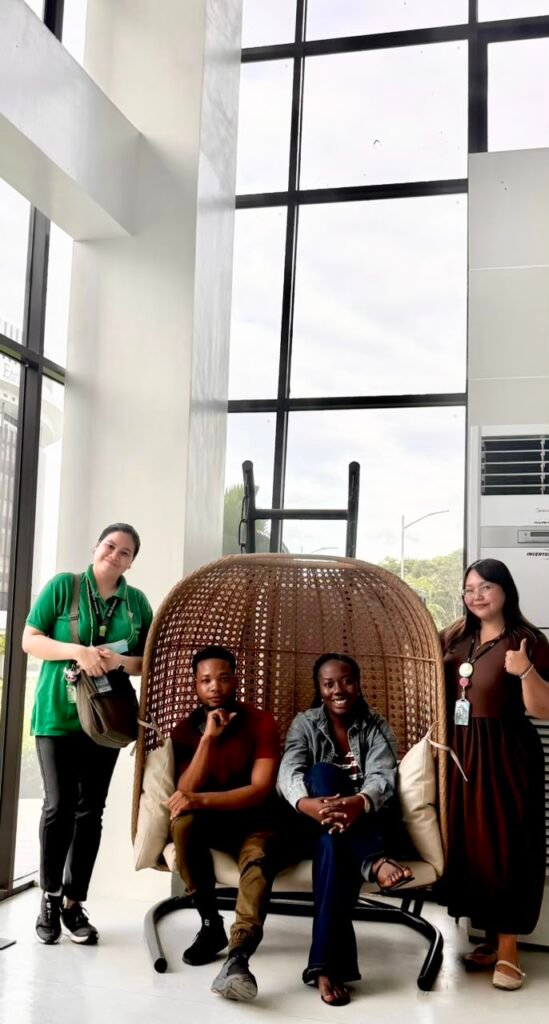
The visit to the Philippines demonstrated the value of international research partnerships in addressing shared public health challenges.
Although Ghana and the Philippines are geographically distant, both countries face challenges related to mosquito-borne diseases. Bringing researchers together creates opportunities to share knowledge, test technologies in different settings and build solutions that can learn from multiple contexts.
For AI4PEP Ghana, the collaboration represents another important step in the development of innovative and locally relevant research approaches.
The visit was not simply about deploying technology. It was about building capacity, sharing expertise, testing ideas and strengthening relationships between research teams.
As the AI4PEP-MSD2 project continues, the collaboration between researchers in Ghana and the Philippines will contribute to ongoing efforts to develop smarter tools for mosquito surveillance.
Through partnerships like this, research can move beyond individual institutions and national borders to address challenges that require collective knowledge and innovation.
AI4PEP Ghana remains committed to advancing research at the intersection of artificial intelligence, public health and community needs—working with partners across the Global South towards stronger, smarter and more responsive disease surveillance systems.
Research. Collaboration. Innovation. Impact.
#AI4PEP #AI4PEPGhana #MosquitoTrack #KNUST #DeLaSalleUniversity #MosquitoSurveillance #ArtificialIntelligence #Bioacoustics #ClimateHealth #GlobalHealth #ResearchCollaboration #DiseaseSurveillance