AI for PEP Ghana Shines at the 2nd KNUST Research Conference: A Landmark Recognition for Homegrown AI Research
The AI for Pandemic and Epidemic Prevention (AI4PEP) Ghana research group has achieved a remarkable milestone, walking away from the just-ended 2nd KNUST Research Conference with two prestigious institutional awards — the Best Innovation Award and the Multidisciplinary Research Award. These recognitions are not only a testament to the team’s scientific excellence but also a powerful affirmation of the critical role that AI-driven research is playing in shaping the future of public health in Africa.
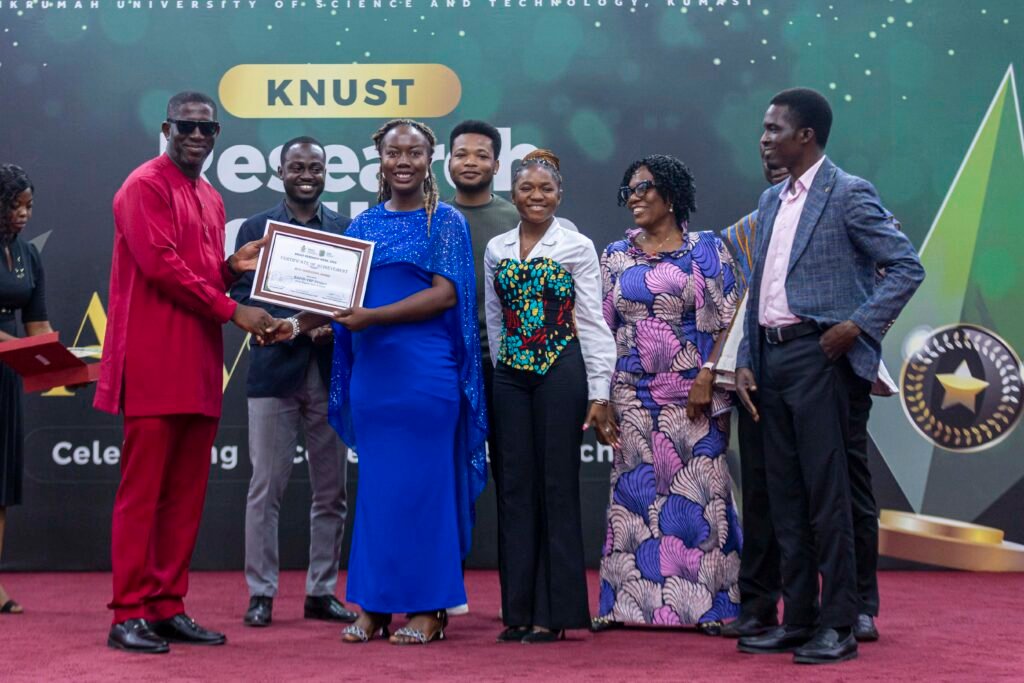
A Team Built on Purpose and Interdisciplinary Strength
AI4PEP Ghana, led by Prof. Kingsley Badu at the Department of Theoretical and Applied Biology, KNUST, is a multidisciplinary research group committed to harnessing the power of artificial intelligence for epidemic and pandemic prevention across Africa. The team brings together experts from biology, physics, computer science, epidemiology, and data science — a deliberate design that reflects the complex, cross-cutting nature of the public health challenges they seek to address.
It is precisely this interdisciplinary approach that earned the team the Multidisciplinary Research Award at the 2nd KNUST Research Conference — a recognition that celebrates research which transcends traditional disciplinary boundaries to generate solutions with real-world impact.
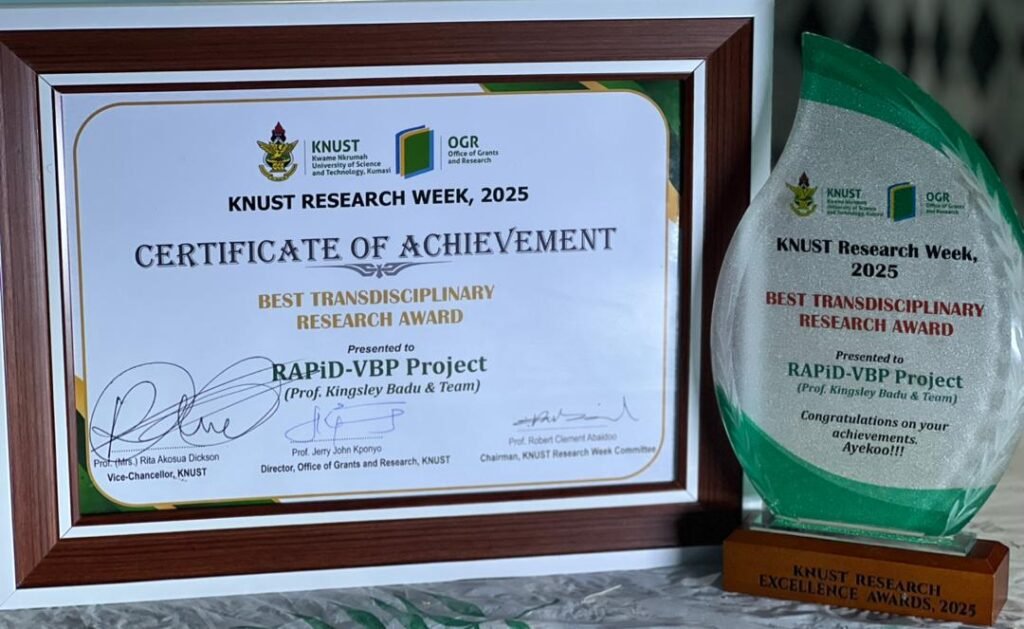
Best Innovation Award: Recognising Cutting-Edge AI Solutions
The Best Innovation Award was awarded in recognition of the team’s groundbreaking work in developing novel AI-driven tools for vector surveillance and infectious disease monitoring. Among the innovations that have defined AI4PEP Ghana’s research output are:
- MosqMixerNets — a pioneering deep learning architecture designed for the early-stage classification of mosquito species, offering a non-invasive, cost-effective alternative to traditional morphological and genetic identification methods.
- YOLOv5-based adult mosquito detection — a computer vision model enabling real-time identification and tracking of adult mosquitoes in the field, significantly advancing the speed and accuracy of vector surveillance.
- AI-driven bioacoustic surveillance — the development of an extensive dataset of over 25,000 mosquito wingbeat audio recordings used to train models that classify mosquito genera with a 92% success rate.
- A low-cost IoT acoustic and environmental sensing system for real-time mosquito surveillance in resource-limited settings.
These innovations represent exactly the kind of bold, Africa-led, context-sensitive technology development that the global health community needs — and that the KNUST Research Conference has now formally recognised.
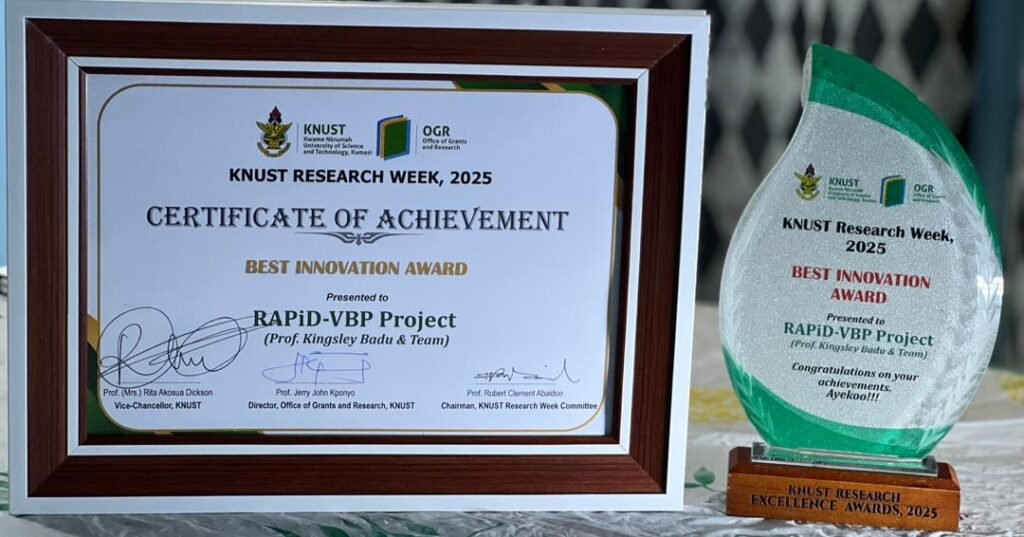
What This Recognition Means
Winning two awards at a single research conference is a significant achievement for any research group. For AI4PEP Ghana, it carries a deeper meaning. It signals that the work being done — quietly, consistently, and with deep commitment — is not only scientifically rigorous but also broadly valued across disciplines and institutions.
It validates the team’s belief that Africa does not need to import solutions to its health challenges. With the right investment, training, and collaboration, African scientists can develop, own, and lead the innovations that will protect their communities.
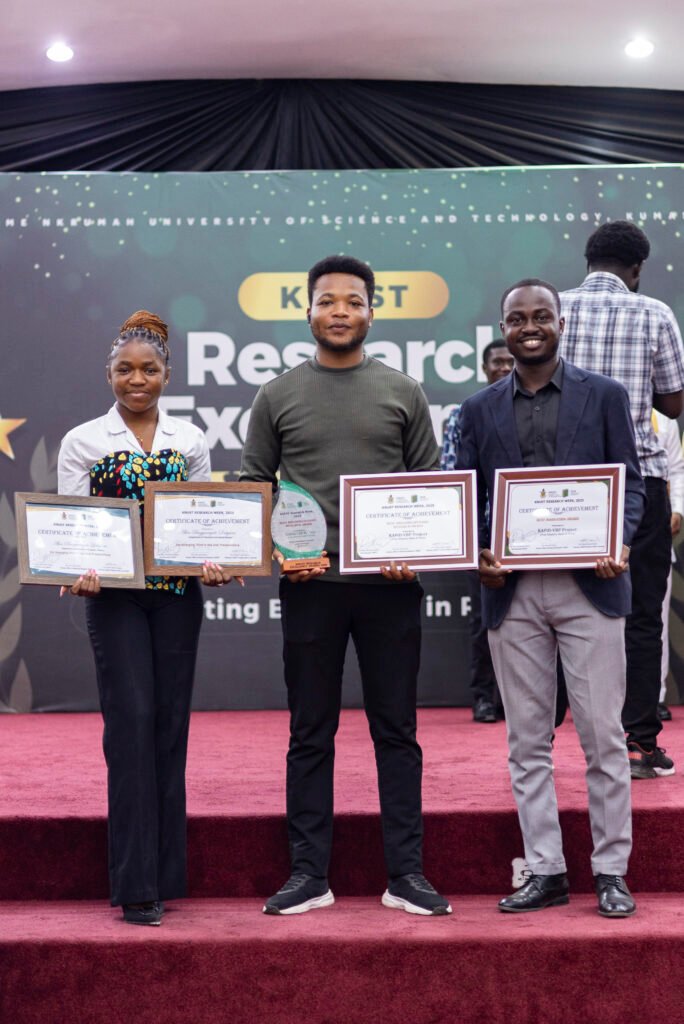
Gratitude and Acknowledgement
AI4PEP Ghana extends sincere gratitude to KNUST and the organising committee of the 2nd Research Conference for creating a platform that celebrates research excellence and innovation. We also thank our funders — the International Development Research Centre (IDRC), Canada, through York University — whose support has made this research possible.
To our partners, collaborators, and institutional supporters, both in Ghana and internationally — including our colleagues at the University of Bremen, Germany — thank you for believing in and contributing to this work.
Most importantly, to every member of the AI4PEP Ghana team — researchers, students, laboratory staff, and support personnel — this recognition belongs to all of you. It is the product of your hard work, intellectual curiosity, and unwavering dedication to science in service of Africa.
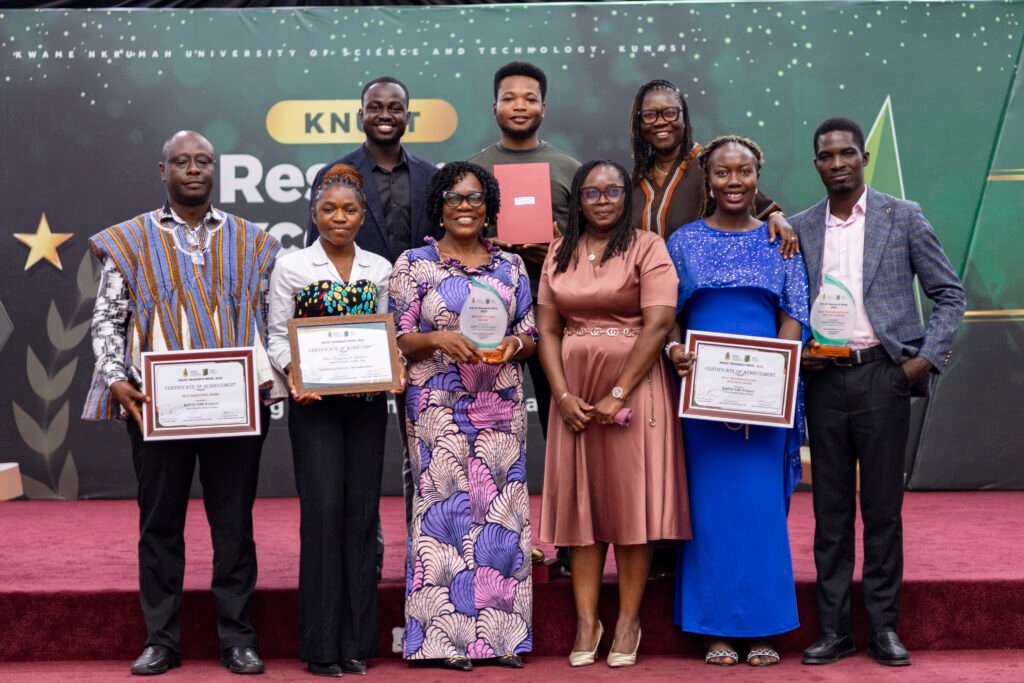
This is not the destination — it is the momentum. We press on.
Learn more: https://ai4pep.org/ghana/