Rising Star: How Lakyiere Alice Bagyiereyele Made History at the 2nd KNUST Research Conference
In science, there are moments that remind us why we invest so deeply in training the next generation. The performance of Lakyiere Alice Bagyiereyele at the just-ended 2nd KNUST Research Conference is one of those moments — and AI for PEP Ghana could not be prouder to call her one of our own.
Alice did not just participate in the conference. She dominated it.
Presenting two separate research abstracts for oral presentation, she went on to win awards for both — claiming 3rd Place in the Best Oral Presentation category and the Overall Best Oral Presentation Award (1st Place). In a single conference, she stood on the podium twice — and in doing so, she announced herself as one of the most exciting young research voices in Ghana’s scientific community today.
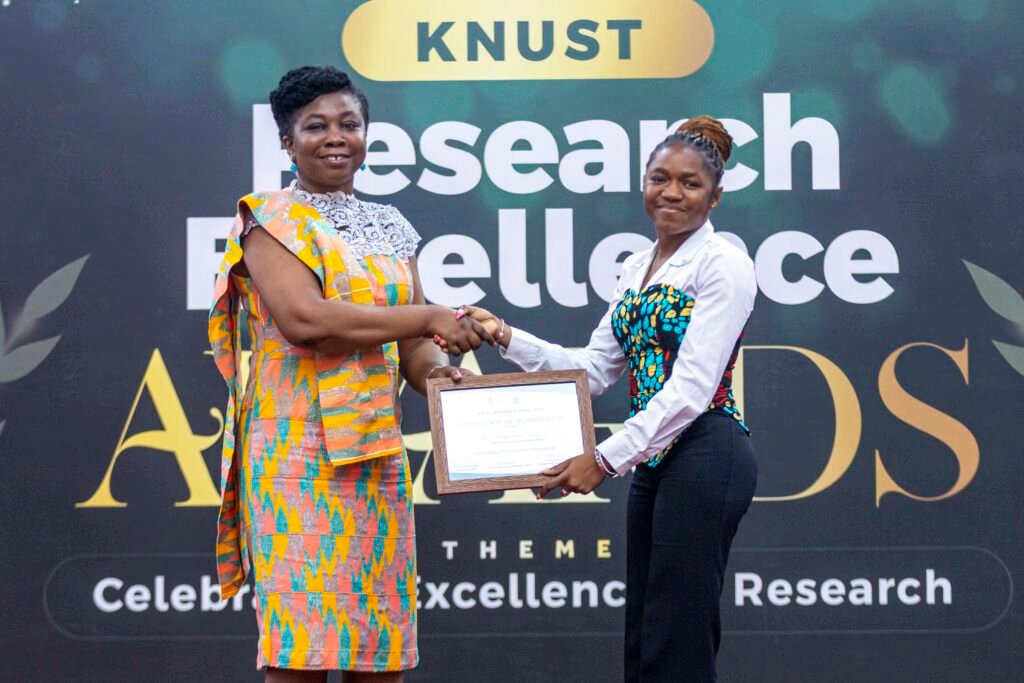
Two Presentations. Two Awards. One Exceptional Scientist.
What makes Alice’s achievement particularly remarkable is the breadth and depth of the research she presented. Both works sit at the intersection of artificial intelligence, computer vision, and vector-borne disease surveillance — areas that are central to the AI4PEP Ghana mission.
Presentation 1: MosqMixerNets — Deep Learning for Early-Stage Mosquito Classification
Alice’s first presentation introduced MosqMixerNets, a novel deep learning architecture developed to classify mosquitoes at their early larval stages. Traditional mosquito identification methods rely on morphological analysis or genetic testing — approaches that are expensive, time-consuming, and often impractical in resource-limited field settings.
MosqMixerNets offers a transformative alternative. By training deep learning models on image data of early-stage mosquitoes, the architecture is capable of accurately distinguishing between species at a stage in the mosquito life cycle when intervention is most effective — before the mosquitoes mature into disease-transmitting adults.
This work has profound implications for malaria, dengue, and other vector-borne disease control programmes across Africa and beyond, where early, accurate, and affordable surveillance tools are urgently needed.
Presentation 2: YOLOv5 for Adult Mosquito Detection
Alice’s second presentation showcased the application of YOLOv5 — a state-of-the-art real-time object detection algorithm — for the detection and identification of adult mosquitoes in field and laboratory settings.
Using computer vision, the model is capable of detecting mosquitoes rapidly and accurately from image or video input, offering a powerful tool for entomological surveillance. This approach reduces the dependence on manual, expert-led mosquito identification — making surveillance faster, more scalable, and accessible even in settings with limited entomological expertise.
Together, these two presentations demonstrated Alice’s ability to work across the full mosquito life cycle — from larvae to adult — applying cutting-edge AI methods to real-world public health challenges.
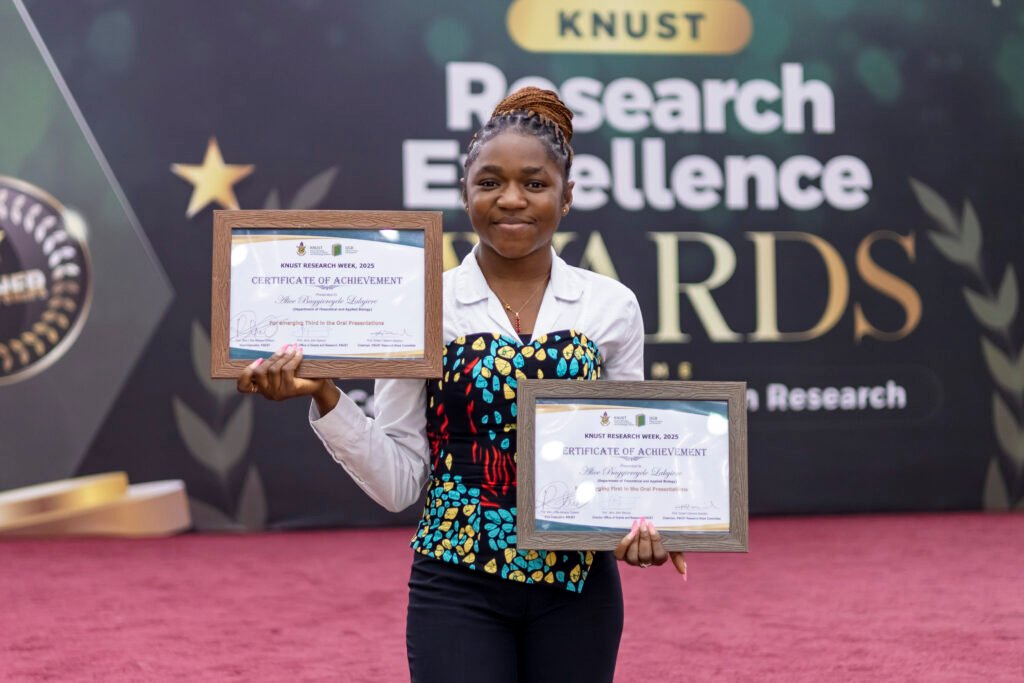
More Than an Award Winner — A Scientist with a Mission
Alice’s success at the 2nd KNUST Research Conference is the product of sustained intellectual effort, rigorous training, and genuine passion for science. As a member of the AI4PEP Ghana research team, she has benefited from an environment that challenges students to think boldly, work across disciplines, and connect their research to the communities it is meant to serve.
But talent like Alice’s does not simply emerge from an environment — it shapes it. Her curiosity, commitment, and capacity to produce high-quality, impactful research at this stage of her career sets a standard that inspires everyone around her.
She is not just a student winning awards. She is a scientist contributing meaningfully to the global effort to prevent epidemics and pandemics using artificial intelligence — and doing so as a young African woman in STEM.
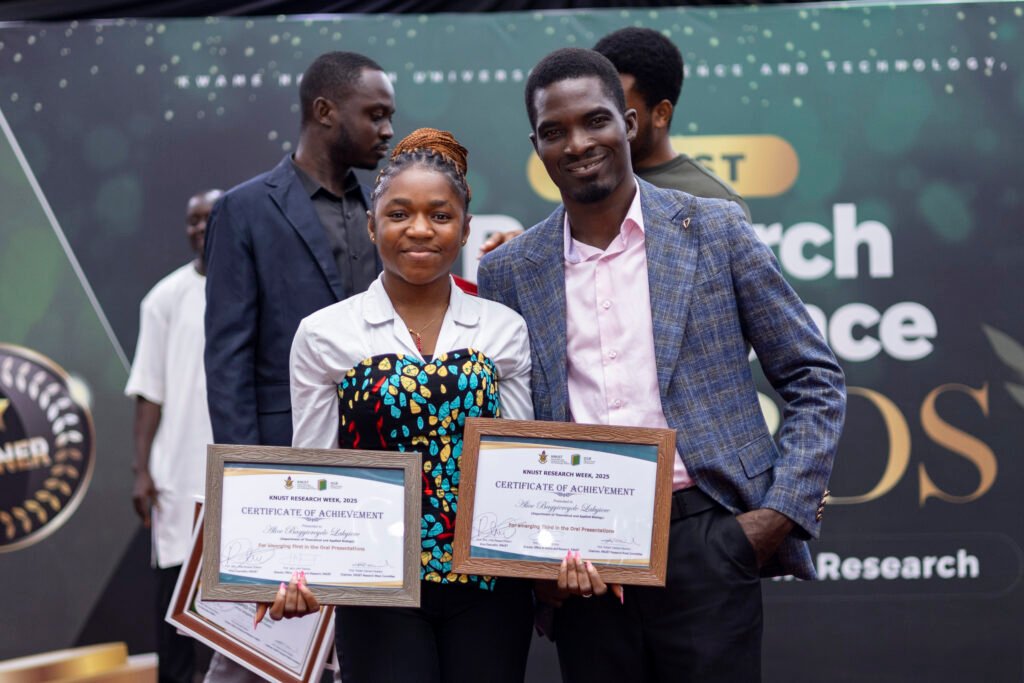
A Word of Appreciation
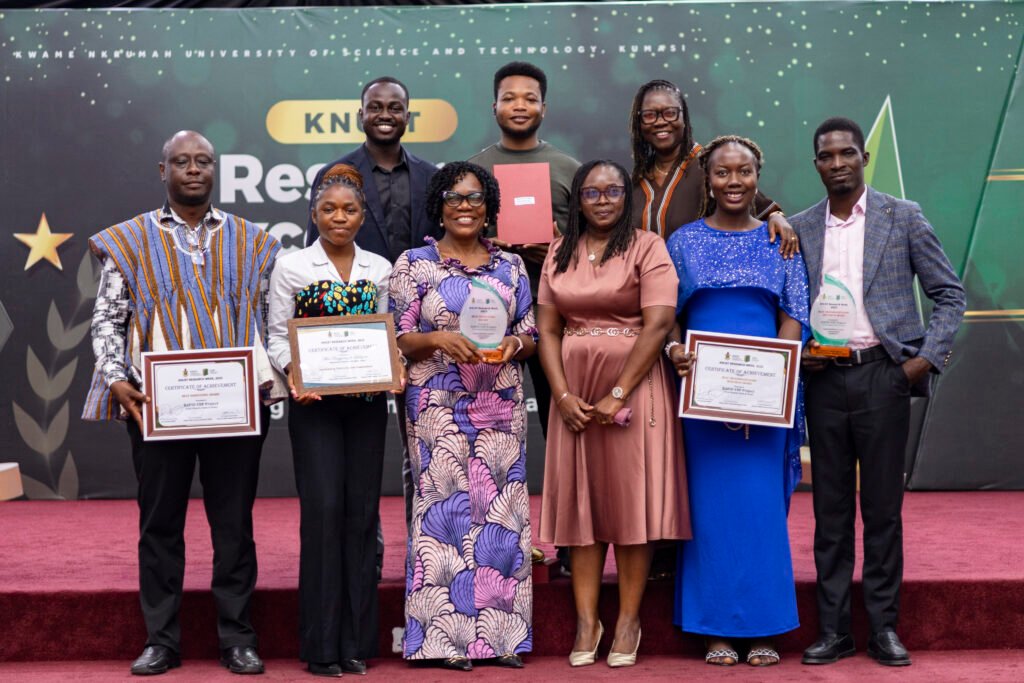
AI4PEP Ghana extends heartfelt congratulations to Alice on this extraordinary double achievement. We also express gratitude to the KNUST Research Conference organising committee for providing a platform where emerging researchers like Alice can present, compete, and be recognised at the highest level.
To the mentors, colleagues, and collaborators who have walked this journey with Alice — thank you. And to Alice herself: we celebrate you, we are proud of you, and we cannot wait to see what you do next.
The future of AI for health in Africa is bright — and it looks like you.
Learn more: https://ai4pep.org/ghana/